manager@wuxisunway.com

+86-13616182007

Box Beam Roll Forming Machine

November 14, 2025

Box Beam Roll Forming Machine: Comprehensive Guide, Features, and Applications

A Box Beam Roll Forming Machine is a highly specialized production system designed to convert metal coils into high-strength box-shaped structural beams through a continuous cold-forming process. With its ability to manufacture uniform, high-rigidity, hollow structural sections, this machine has become essential in construction, transportation, and industrial manufacturing. This guide covers how the machine works, its components, technical advantages, production capabilities, and practical considerations for buyers and operators.


What Is a Box Beam?

A box beam—also known as a rectangular hollow section (RHS) or tube beam—is a closed metal profile offering exceptional strength-to-weight performance. Compared with open profiles such as C-channels or I-beams, box beams provide:

  • Higher torsional resistance

  • Increased load-bearing capability

  • More uniform structural stability

  • Reduced overall weight

  • Internal space for wiring or functional routing

These advantages make box beams ideal for building frameworks, trailers, storage systems, conveyors, scaffolding, and heavy-duty mechanical structures.


How the Box Beam Roll Forming Machine Works

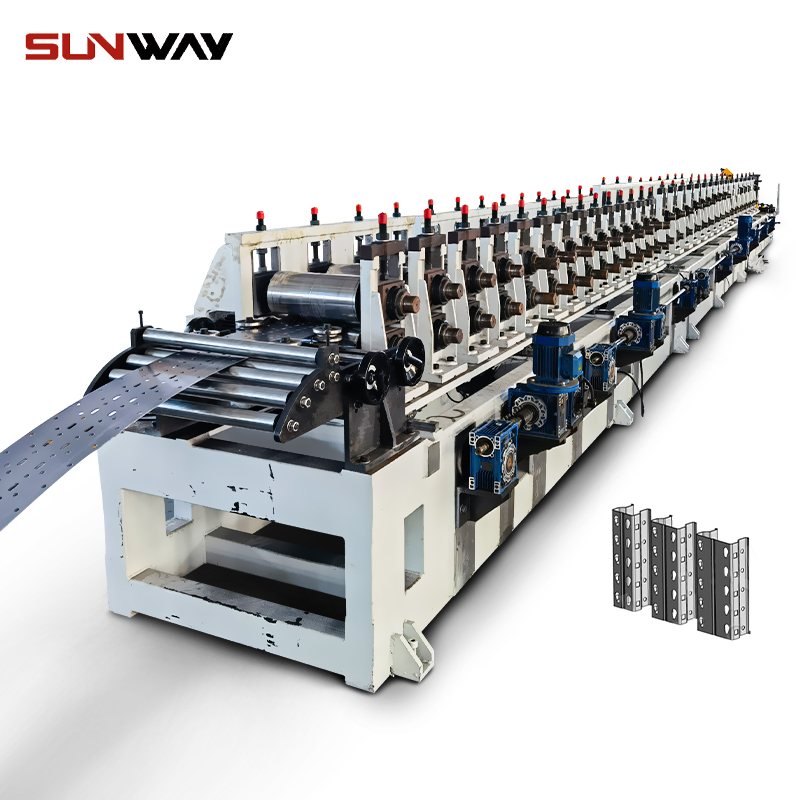
The machine uses a series of precisely aligned roller stations to gradually transform a flat strip of metal into a fully formed rectangular tube. The process is fully automated and typically includes:

  1. Decoiling System
    Holds and unwinds steel coils with stable tension control.

  2. Feeding & Guiding Unit
    Straightens and positions material for accurate forming.

  3. Roll Forming Section
    Multiple forming stations bend the material progressively until the box profile is achieved.
    Advanced CNC-adjustable roll systems enable rapid size changes without replacing tooling.

  4. Cutting System
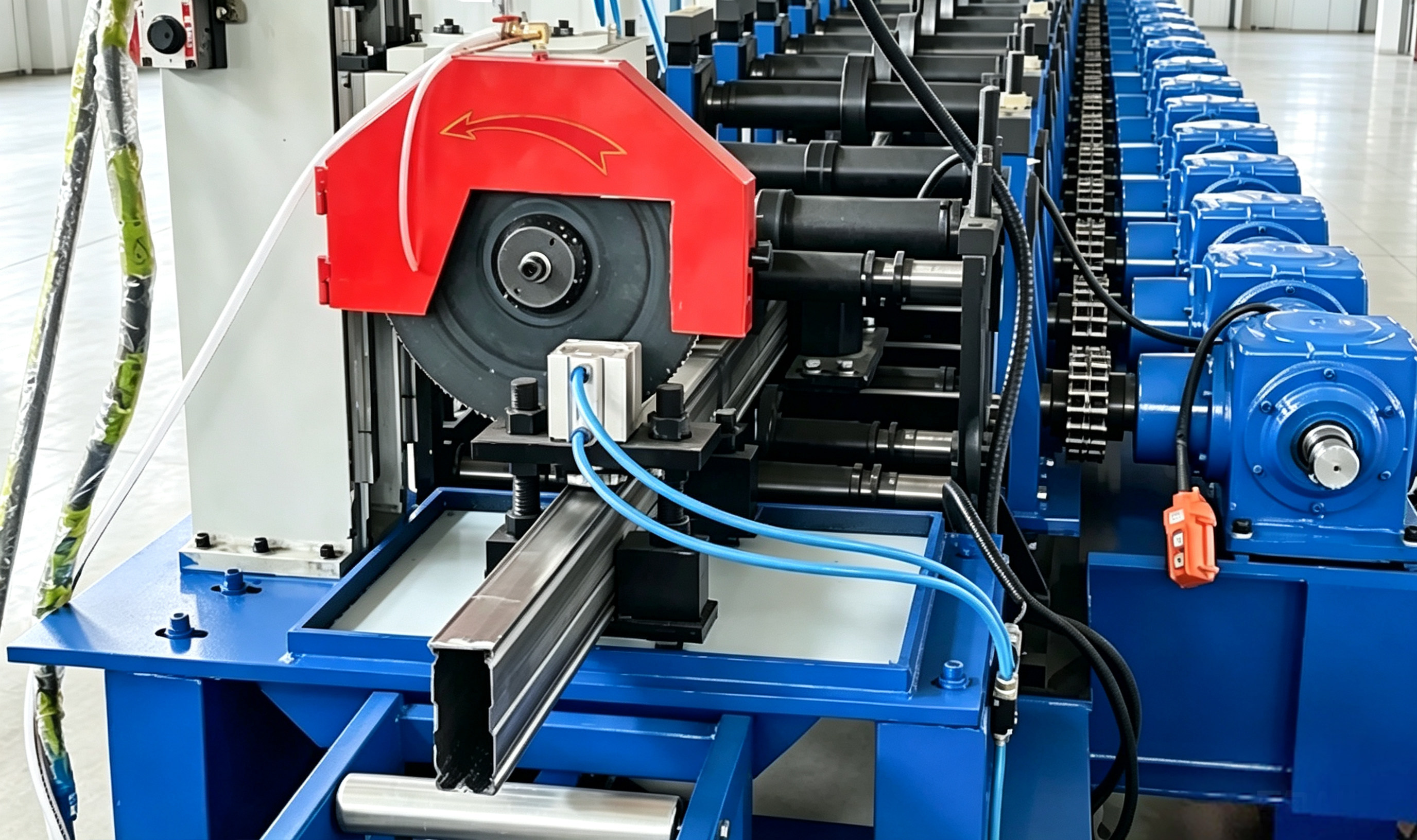
    A flying hydraulic or servo cutter trims beams to precise lengths. Length tolerances typically reach ±2 mm when calibrated with encoder measurement.

  5. Run-out Table & Stacking
    Guides finished beams for collection, packaging, or downstream operations.

Flying saw cutting system on SUNWAY box beam roll forming machine for continuous production


Materials & Dimensional Capabilities

Depending on configuration, a high-quality box beam line can process:

  • Carbon steel

  • Galvanized steel

  • Stainless steel

  • Aluminum

  • Pre-painted coils

Typical thickness ranges vary from 0.8 mm to 6 mm, and beam heights can reach from 50 mm to over 600 mm, depending on roller diameter and structural design.


Key Features & Benefits

1. High Structural Precision

When properly aligned, the machine delivers dimensional accuracy up to ±0.5 mm—critical for applications requiring high beam consistency.

2. Superior Strength Output

Cold-forming increases the metal’s mechanical strength, producing beams with remarkable stiffness and load capacity.

3. Continuous, High-Efficiency Production

Roll forming offers far greater throughput and energy efficiency compared to press brake or welding fabrication.

4. CNC Adjustable Rollers

Advanced models include servo-controlled forming stations that automatically adjust for different beam widths and heights, significantly reducing changeover time.

5. Reduced Material Waste

The continuous forming process maximizes coil utilization and minimizes scrap.

6. Integrated Safety Systems

Emergency stops, light curtains, sensors, and protective guards ensure operator safety and equipment reliability.


Applications Across Industries

Box beam roll forming machines serve diverse industries including:

  • Structural construction and steel framing

  • Warehouse racking and storage systems

  • Automotive trailers and chassis manufacturing

  • Conveyor systems and logistics equipment

  • Scaffolding and temporary structures

  • Industrial machinery components

Their versatility makes them indispensable for companies requiring uniform, high-strength profiles at scale.


How to Choose the Right Box Beam Roll Forming Machine

When evaluating equipment suppliers, consider:

  • Production range (sizes, thickness, material types)

  • Machine rigidity and forming station accuracy

  • Customization capabilities

  • Manufacturer experience and certifications

  • Installation and training services

  • After-sales support and spare parts availability

  • Warranty terms and machine lifespan

  • Price-to-performance ratio

Many global suppliers—from Italy and Turkey to China—offer machines at varying price levels depending on automation and configuration.


Conclusion

A Box Beam Roll Forming Machine is an essential asset for factories requiring high-strength, precise steel beams with efficient, continuous production. With advanced technology such as CNC automatic adjustment, encoder length control, and integrated safety systems, modern box beam lines deliver excellent performance, cost-efficient output, and long-term reliability.

Whether for construction, logistics, automotive frames, or industrial equipment, investing in a well-engineered roll forming system can significantly enhance manufacturing quality and productivity.