


Custom Roll Forming Solutions for OEM Racking Manufacturers: Engineering Precision & Co-Development
July 22, 2026
The OEM Paradigm Shift—From Mass Standard Racks to High-Mix Custom Manufacturing
The global warehouse and logistics industry is experiencing a massive structural transition. Driven by the rapid growth of automated storage and retrieval systems (AS/RS), multi-tier fulfillment centers, and specialized cold-chain logistics, end-users no longer settle for generic, off-the-shelf storage racks. Instead, they demand highly customized, application-specific structural layouts. For original equipment manufacturers (OEMs) and contract fabricators, this shift presents both an unprecedented market opportunity and a severe operational challenge. Traditional, rigid production machinery built solely for mass standard profiles can no longer keep pace with high-mix, low-volume contract bids.
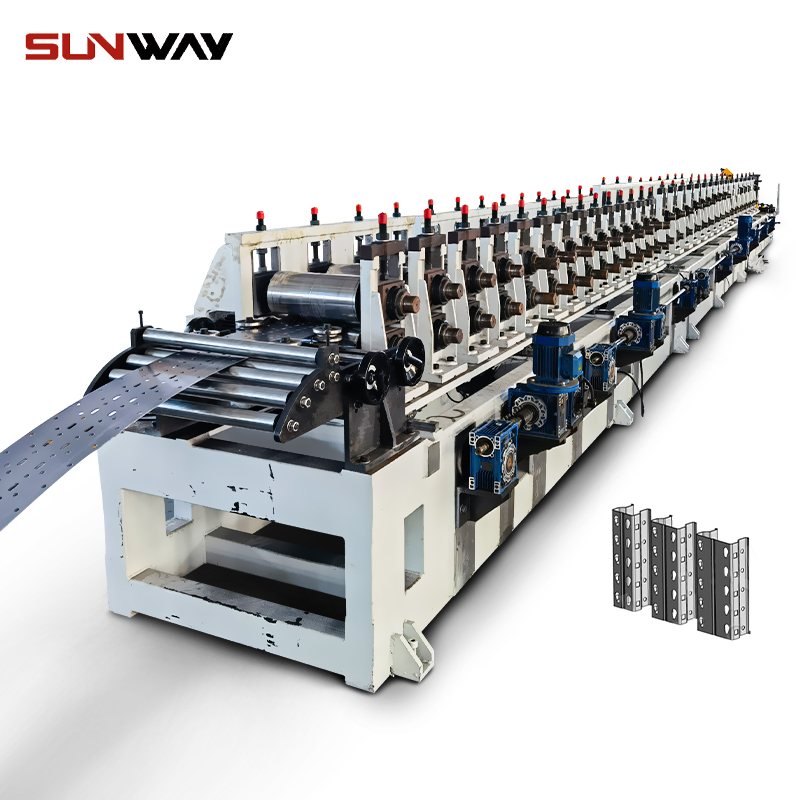
To remain competitive and secure high-margin project contracts, forward-thinking manufacturers must upgrade their factories with bespoke engineering capabilities. Transitioning to custom-engineered production platforms allows OEMs to manufacture intricate column profiles and high-precision shelf uprights and brackets tailored to exact client blueprints. Rather than adapting your designs to the limitations of standard machinery, investing in a custom roll forming machine enables your plant to deliver superior structural load capacities, expand its product catalog versatility, and dominate specialized logistics markets.
Unpacking the Core Manufacturing Pain Points Facing Modern OEM Racking Suppliers
Operating as an agile OEM supplier requires solving complex engineering challenges that standard machinery vendors frequently overlook:

Pitch Accumulation and Alignment Errors: The primary point of failure when assembling a heavy-duty upright shelf rack occurs at the connection points. Standard punching mechanisms suffer from pitch deviation over long profile lengths, causing mismatch when locking an upright shelf bracket into the column.
Material Limitations and Springback: Processing specialized high-yield steel alloys or non-standard coil thicknesses often results in severe material springback and corner deformation, compromising structural tolerances.
Intellectual Property (IP) Risks: Sharing custom profile CAD drawings with generic machine builders carries the risk of proprietary designs leaking to competitors.
High Setup Scrap Rates: Frequent trial-and-error setups during custom profile transitions lead to costly material waste, eroding profits on specialized production runs.
Engineering Capability First: How Custom Roll Forming Solutions Solve OEM Bottlenecks
Overcoming these manufacturing hurdles demands a custom-engineered equipment strategy focused on precision performance:
To eliminate pitch accumulation errors, custom lines incorporate high-speed servo-driven CNC punching arrays synchronized with high-resolution encoder feedback. This closed-loop control guarantees that every slot cut into the raw steel aligns with sub-millimeter precision, ensuring that every manufactured upright shelf bracket seats flawlessly during field installation. Furthermore, custom roll tooling geometries—engineered via specialized software simulations—counteract material memory, producing perfectly straight columns for any heavy-duty upright shelf rack configuration.
The Business Logic: Why Tier-One OEMs Prefer Co-Developed Custom Machinery
Investing in a co-developed production platform yields immediate commercial advantages for enterprise OEM suppliers:
Unrivaled Contract Bidding Agility: A factory capable of manufacturing non-standard geometric profiles can win high-value, specialized logistics contracts that competitors with rigid, standard machinery must decline.
Operational Waste Mitigation: Custom lines engineered specifically for your material grades minimize scrap during profile setups, dramatically lowering your operational expenditure (OPEX).
Long-Term Market Reputation: Delivering structurally certified, defect-free systems featuring perfectly fitting shelf uprights and brackets strengthens your brand equity among tier-one logistics developers.
Tailored Equipment Configurations Across Diverse OEM Racking Systems
Custom machinery engineering must adapt to varied structural requirements across different warehousing applications:
Related News

2026-09-28 8
How to Select the Right Roll Forming Machine for Modern Warehouse Storage Racks
2026-09-22 13
How to Choose the Right Upright Rack Roll Forming Machine for Your Warehouse Racking Production?
2026-09-20 16
Precision Cold Roll Forming for Step Beam Pallet Racking & Shelving Systems