


How Racking Columns Are Manufactured via Precision Roll Forming
August 24, 2026
The Vertical Backbone of Modern Storage Systems
In high-density industrial logistics and material handling, the vertical column—commonly referred to as the rack upright—serves as the primary structural backbone of the entire storage facility. Whether installed in standard selective pallet systems or fully automated high-bay AS/RS facilities reaching heights of 15 to 30 meters, the rack column bears the complete static and dynamic load of heavy inventory, wind forces, and material handling impacts.

As modern warehousing shifts toward higher vertical clear heights and heavy-duty load capacities exceeding 20 tons per bay, the performance demands placed on these structural steel components have intensified. Traditional press-brake bending methods can no longer meet the stringent dimensional tolerances, high throughput requirements, and complex hole-pattern geometries needed for modern rack construction. Today, the automated, high-precision pallet rack roll forming machine line stands as the essential manufacturing technology behind reliable, high-capacity rack columns.
Structural Complexities: Why Upright Profiles Demand Cold Roll Forming
A modern rack upright is not a simple C-channel or hollow tube. To achieve an optimal strength-to-weight ratio, structural engineers design upright profiles with intricate multi-bend geometries, internal stiffening ribs, and continuous teardrop or hook slots.
The Geometry Challenge
Modern upright columns feature multiple return bends—often ranging from 9 to 13 distinct folding edges—that create closed or semi-closed structural pockets. Producing these profiles on standard press brakes would require dozens of manual re-positioning steps, causing labor bottlenecks, inconsistent angle accuracy, and severe length limitations.
Key Profile Geometries & Processing Hurdles
Omega Profiles (Classic Heavy-Duty): Characterized by high torsional rigidity and wide load-bearing faces. The primary processing challenge is controlling flange warping and material springback across the return lips.
Complex Multi-Bend Sections (AS/RS Grade): Incorporating up to 13 precision bends with internal stiffening channels. These profiles demand a specialized rack column roll forming machine capable of maintaining tight cumulative angular tolerances across all forming stages.
Teardrop & Butterfly Hole Patterns: High-density slot arrays punched along the face of the strip. High-speed punching risks expanding or distorting the outer edges of the steel before it enters the forming rolls.
The Material Argument
Continuous cold roll forming incrementally shapes heavy-gauge steel (2.0mm - 4.0mm+) at ambient temperatures. This continuous deformation process induces work hardening at the bend radii, significantly increasing the yield strength of the finished profile without damaging steel ductility.
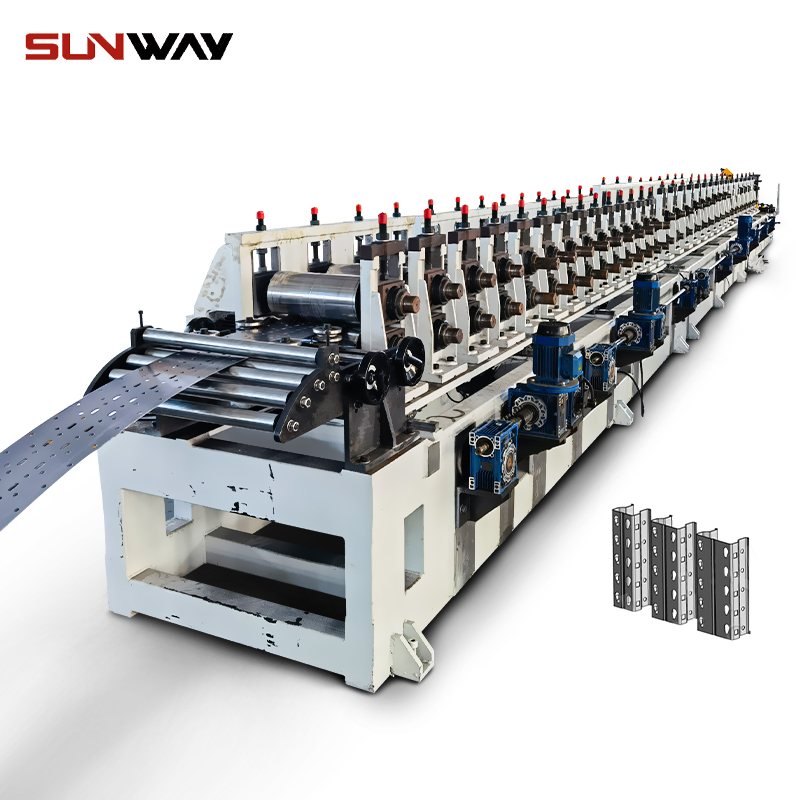
Step-by-Step Engineering: How a Pallet Rack Roll Forming Machine Crafts Uprights
Manufacturing a high-precision structural column from a raw coil of structural steel requires a fully integrated, multi-stage automated production line.
Related News

2026-09-30 18
How to Select the Right Roll Forming Machine for Modern Warehouse Storage Racks
2026-09-22 18
How to Choose the Right Upright Rack Roll Forming Machine for Your Warehouse Racking Production?
2026-09-20 20
Precision Cold Roll Forming for Step Beam Pallet Racking & Shelving Systems