


Automated Roll Forming Solutions for Industrial Racking Box Beams
October 10, 2026
Introduction: The Modern Demand for Automated Box Beam Manufacturing
In high-bay warehousing, automated fulfillment centers, and heavy-duty logistics facilities, horizontal load beams carry the primary static and dynamic weight of palletized inventory. Among structural horizontal members, the box beam is widely recognized for its superior strength-to-weight ratio and structural stability. Engineered as a closed tubular profile, a box beam provides exceptional structural integrity under heavy loads.
When evaluating how to make a box beam for industrial pallet racking, manual fabrication, press-braking, or segmented welding methods fall short. Modern storage facilities require structural precision, consistent profile straightness, and flawless end-connector welding. Meeting these global supply chain demands requires a high-performance box beam machine—an automated, integrated cold roll forming production cell engineered for continuous, high-volume manufacturing.
Structural Mechanics: Why Box Beams Demand Engineering Rigidity
A pallet rack box beam consists of a roll-formed steel section shaped into a closed box profile, welded or interlocked along its seam, and attached to connector claw plates at both ends.
Compared to open C-channels or step profiles, closed box geometry offers high torsional rigidity. When heavy forklift loading creates off-center forces, a closed box profile resists rotational twisting and lateral buckling. Furthermore, manufacturing an industrial-grade box beam requires tight cross-sectional squareness and zero longitudinal twist along 3.6-meter spans to ensure that end connectors fit securely onto vertical racking uprights during jobsite assembly.
How to Make a Box Beam: Inside the Automated Roll Forming Process
Understanding building a box beam for commercial storage applications involves examining the complete end-to-end automated roll forming sequence:
1. Precision Decoiling & Multi-Roll Leveling: High-yield steel coil (1.5mm - 3.0mm) is uncoiled and passed through a multi-roll precision leveler to relieve material stress, preventing natural bowing or camber in the finished profile.
2. Inline CNC Servo Punching & Slotting: An automated hydraulic punching unit punches locking clip notches and safety pin holes with precise pitch tolerances (±0.1mm) before profile forming begins.
3. Multi-Pass Roll Forming & Section Closure: The flat strip passes through 24 to 30 engineered forming stands, progressively bending the high-tensile steel into a uniform closed box shape without thinning corner radiuses.
4. Dual Closure Solutions (Interlocking vs. Inline Welding):
Mechanical Interlocking: The roll former crimps double-C return edges into a rigid mechanical seam for fast, weld-free assembly.
Mechanical Interlocking: The roll former crimps double-C return edges into a rigid mechanical seam for fast, weld-free assembly.
Continuous Inline Welding: High-speed automated CO2 or fiber laser welding units integrate directly behind the forming mill, creating a continuous full-penetration seam for maximum load capacity.
5. Flying Hydraulic Shearing & Automatic Stacking: A 3D-profiled flying hydraulic shear cuts moving beams to target lengths (±0.5mm) on-the-fly, producing clean, burr-free edges ready for automated end-connector welding.
Key Technologies Defining an Industrial-Grade Box Beam Machine
To achieve continuous high-speed production without profile distortion, advanced box beam production equipment incorporates specialized mechanical and control systems:
Multi-Axis 3D Turk’s Head Adjusters: Positioned at the exit of the forming stands, multi-axis Turk's Head units apply corrective pressure to eliminate longitudinal bow, camber, and torsional twist, delivering perfectly straight profiles required for robotic welding cells.
High-Rigidity Machine Construction: Machine stands built from heavy cast-iron independent gantries and forged 40Cr alloy shafts (Ø90mm - Ø110mm) absorb heavy rolling loads when processing 3.0mm structural steel.
Integrated Inline Seam Tracking: Automated optical laser sensors track the profile seam in real time, adjusting welding parameters dynamically to maintain deep, consistent weld penetration.
Industry 4.0 & Smart Racking Manufacturing
Process automation transforms standalone roll forming mills into fully integrated Industry 4.0 production cells.
Modern high-speed production cells integrate robotic pick-and-place arms that transfer cut profiles directly to dual-station robotic welding cells. These automated stations attach connector claw plates to both ends of the beam simultaneously. Connected PLC controls manage recipe switching, allowing operators to adjust beam height and width dimensions on a single box beam machine line with minimal downtime.
How to Plan an Automated Box Beam Production Line
When planning a factory line for building a box beam network, engineering directors should evaluate three core operational factors:
1. Target Load Specs & Profile Dimensions: Determine required wall gauges (1.5mm - 3.0mm) and beam profile heights (80mm - 160mm) based on target weight capacities per pallet level.
2. Seam Closure Method Selection: Choose between mechanical double-C interlocking (for lower capital costs and fast assembly) and continuous inline seam welding (for heavy-duty AS/RS high-bay environments).
3. Plant Footprint & Logistics Workflow: Allocate sufficient factory length (40m - 60m) to accommodate raw coil storage, uncoiling, roll forming, flying shear units, robotic welding cells, and finished bundle stacking lanes.
Partnering with SUNWAY: Turnkey Box Beam Machine Solutions
As a specialized equipment partner in the cold roll forming sector, Wuxi Sunway Machinery Co., Ltd. (SUNWAY) engineers custom turnkey production systems designed for demanding warehouse racking applications.
Plan Your Automated Production Line: Upgrading your box beam production capabilities or expanding a rack manufacturing facility? Contact the engineering team at SUNWAY today to submit your profile drawings and load parameters. Request a customized Box Beam Automated Line Layout & Proposal.
FAQ: Technical Insights on Building a Box Beam Line
What is the difference between building a box beam via mechanical interlocking versus inline welding?
Mechanical interlocking joins double-C profile edges using precision crimping rollers, eliminating welding power costs and heat distortion. Inline seam welding uses automated continuous welding to join the steel edges, creating a sealed tubular structure with higher torsional strength for heavy-duty applications.
Mechanical interlocking joins double-C profile edges using precision crimping rollers, eliminating welding power costs and heat distortion. Inline seam welding uses automated continuous welding to join the steel edges, creating a sealed tubular structure with higher torsional strength for heavy-duty applications.
Related News

2026-09-30 31
How to Select the Right Roll Forming Machine for Modern Warehouse Storage Racks
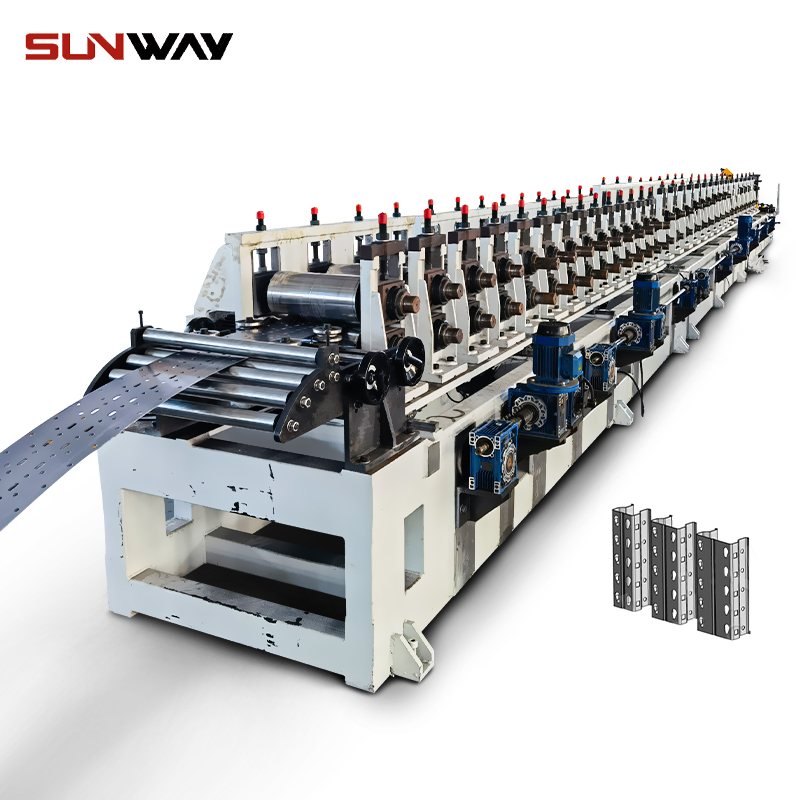
2026-09-22 29
How to Choose the Right Upright Rack Roll Forming Machine for Your Warehouse Racking Production?
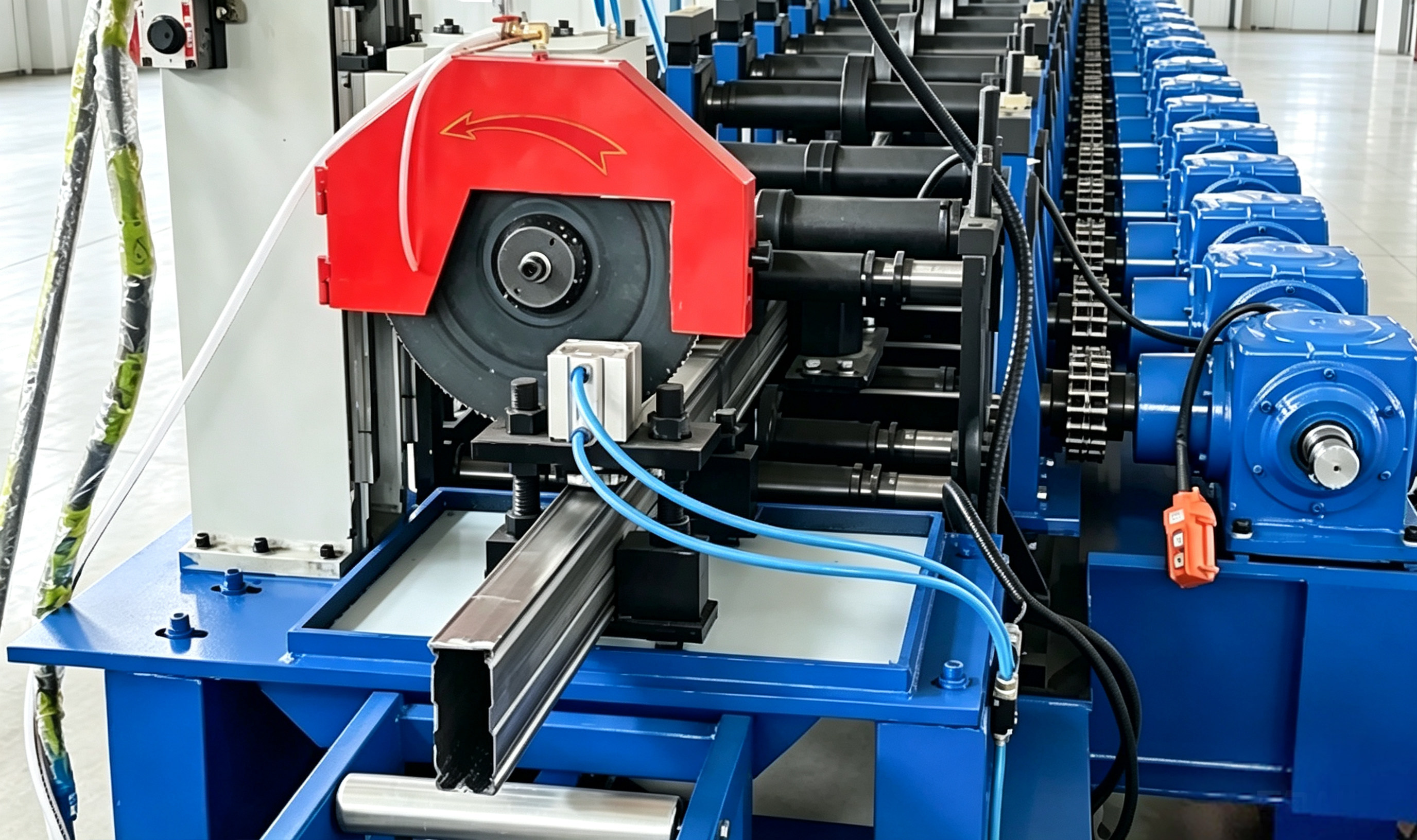
2026-09-20 32
Precision Cold Roll Forming for Step Beam Pallet Racking & Shelving Systems