


How to Select the Right Roll Forming Machine for Modern Warehouse Storage Racks
September 30, 2026
The Strategic Imperative of Machine Procurement
Driven by global e-commerce expansion, automated distribution centers, and high-bay AS/RS facilities, demand for modern warehouse storage rack systems has reached an all-time high. Modern logistics centers require racking components engineered for extreme load capacities, high structural stability, and razor-thin assembly tolerances.
For racking fabricators and plant directors, scaling production to meet this demand requires a high-stakes procurement choice: investing in automated roll forming lines. Selecting an ill-fitted rack roll forming machine leads to severe operational bottlenecks—such as high material scrap rates, excessive downtime during profile changeovers, and field assembly failures. Choosing the right machinery, conversely, maximizes production efficiency, lowers cost per ton, and shortens payback timelines. This buyer’s guide breaks down the core technical criteria for selecting the ideal equipment for your manufacturing goals.
Structural Diversity: Aligning Machine Specifications with Racking Profiles
A single, generic roll mill cannot manufacture an entire racking system efficiently. A complete warehouse storage rack facility relies on distinct structural components, each demanding specific roll forming engineering parameters:
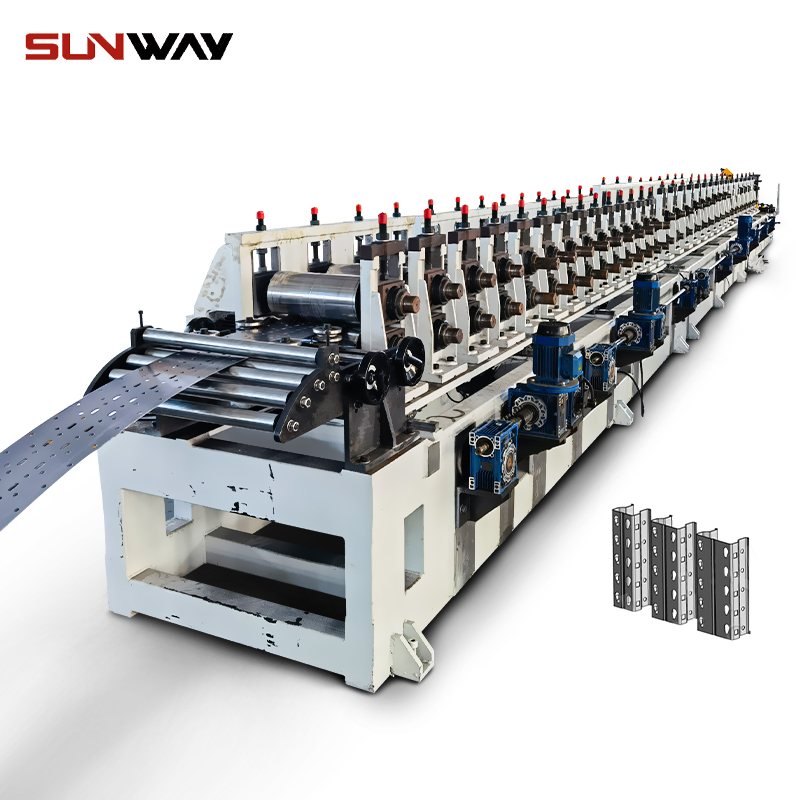
Upright Columns (Omega Profiles): Uprights carry the vertical static loads of high-bay racks. Roll forming machines for uprights must process heavy-gauge steel (2.0mm - 4.0mm) with multi-pass forming stands, high-torque gearboxes, and heavy-duty hydraulic punching dies to punch complex slot patterns without edge distortion.
Horizontal Step Beams & Box Beams: Horizontal load members require roll mills equipped with seam-clinching units, edge-folding dies, or automatic inline welding systems to ensure torsional rigidity under heavy pallet weight.
Shelf Decking & Light Panels: Producing light-to-medium shelf levels requires a specialized shelf rack roll forming machine capable of handling wide sheet uncoiling, automatic edge-rib stiffening, and fast profile width adjustments for varied shelf sizes.

The 4-Point Machinery Procurement Evaluation Framework
To evaluate competing equipment quotes objectively, procurement teams should apply a structured four-part technical assessment framework:
Criteria 1: Material Gauge & High-Yield Steel Adaptability
Modern rack engineering increasingly uses high-strength structural steel grades (such as Q355, Q460, or S350GD) to decrease dead weight while maintaining structural capacity. Ensure your rack roll forming machine features heavy-duty machine bases, high-grade alloy steel rollers (Cr12MoV/D2 hardened to HRC 58-62), and robust drive gearboxes capable of forming high-tensile material without roller flexing or uncompensated material springback.
Criteria 2: Profile Changeover Agility
Downtime kills operational profitability. Evaluate profile changeover mechanics based on your production mix:
Manual Spacer Adjustments: Low initial cost, but requires 2 to 4 hours of manual setup per SKU change.
Auto-Servo Motorized Adjustment: Touchscreen PLC controls move roller stands on linear guides in under 3 minutes.
Modular Cassette Systems: Swappable roller stand sub-assemblies allow dramatic profile geometry changes in under 15 minutes.
Criteria 3: Inline Punching & Pitch Precision
An upright or shelf beam is unusable if hole pitch accumulates error along its length. A high-speed rack roll forming machine must incorporate CNC closed-loop servo feeders and hydraulic punch stations that maintain hole-to-hole pitch tolerances strictly within ±0.1mm across a 12-meter profile.
Criteria 4: Industry 4.0 Automation & Line Expandability
Future-proof your capital investment. Check whether the line’s control architecture integrates with factory MES systems and allows downstream additions, such as robotic arm stacking cells, automated bundling systems, or automated inline spot-welding units.
Operational Scaling: Matching Machinery Configurations to Production Volume
Related News
2026-09-22 14
How to Choose the Right Upright Rack Roll Forming Machine for Your Warehouse Racking Production?
2026-09-20 17
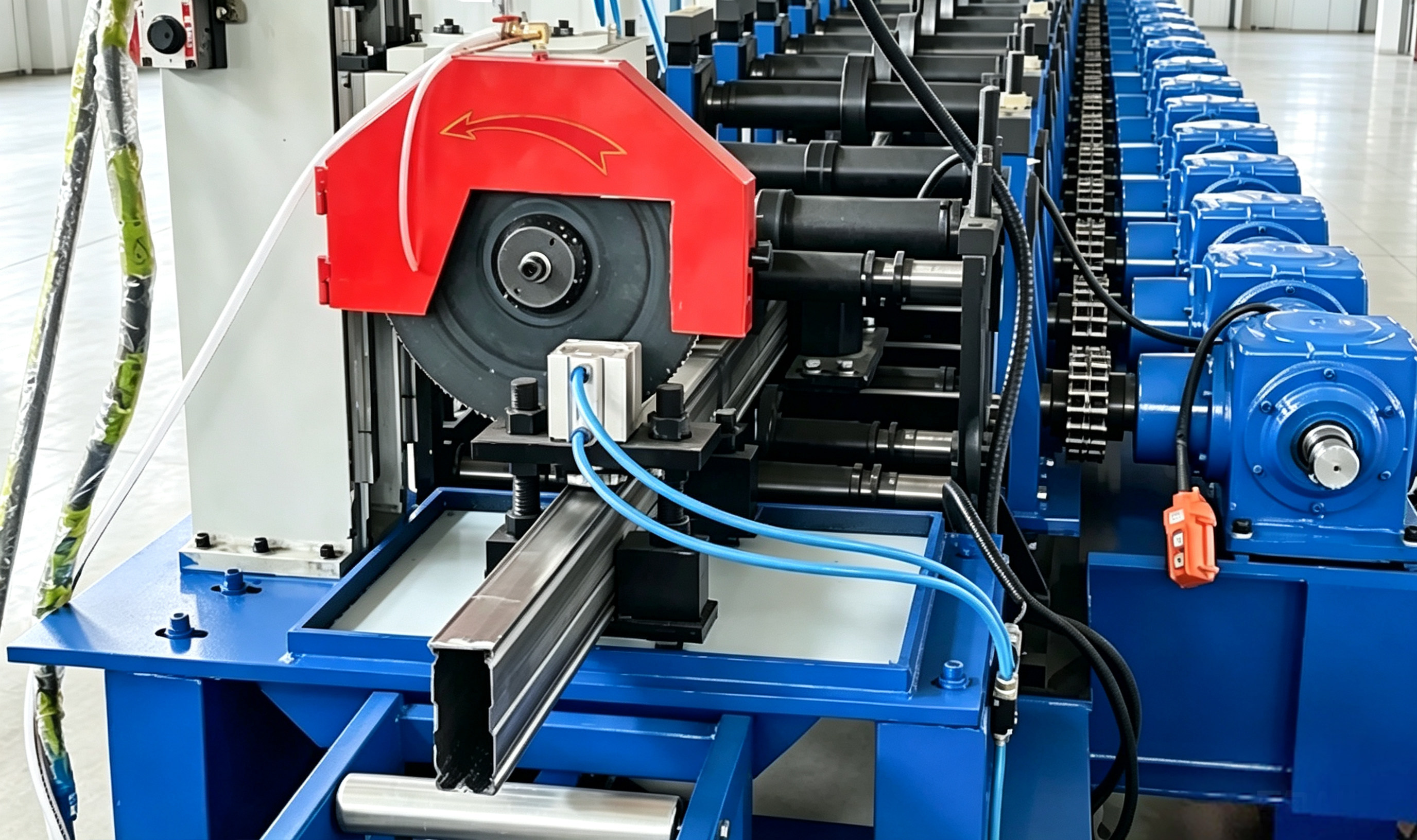
Precision Cold Roll Forming for Step Beam Pallet Racking & Shelving Systems
2026-09-17 20
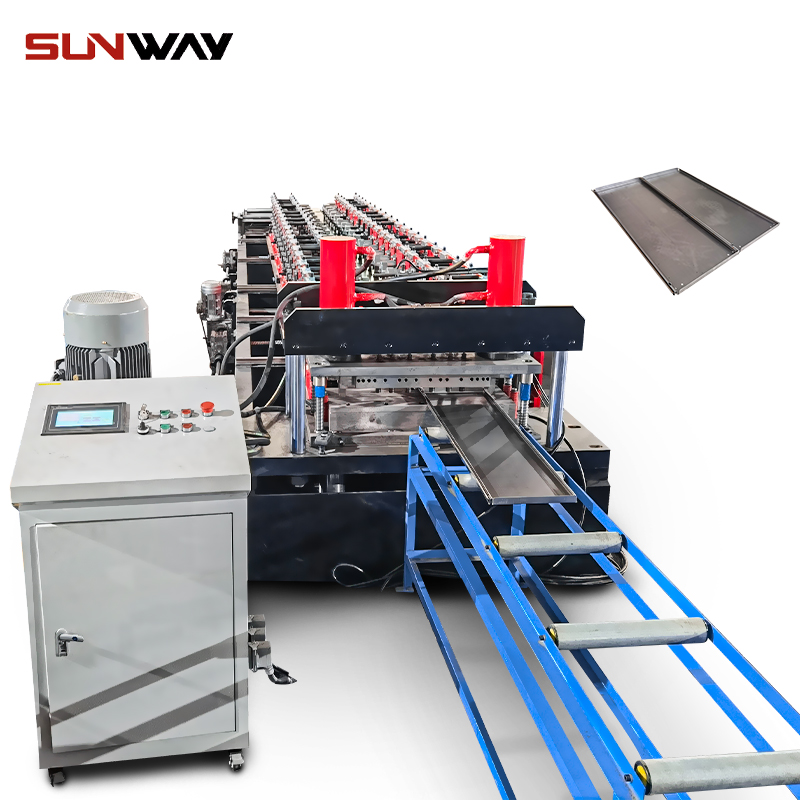
Setting Up a Pallet Racking Plant: Equipment Selection & Production Line Layout