Box Beam Roll Forming Machine: How Section Design Affects Structural Performance
October 15, 2026
In modern warehouse storage systems, pallet rack beams play an important role in supporting stored loads and maintaining the functionality of the racking structure. Their performance depends not only on the steel material used, but also on the beam’s cross-sectional geometry, forming accuracy, connection design, and manufacturing consistency.
A Box Beam Roll Forming Machine is designed to manufacture box-section beams used in pallet racking and industrial storage applications. By progressively forming steel strip into a specified profile, the production line helps manufacturers achieve repeatable dimensions and a consistent beam shape.
However, selecting the right equipment involves more than choosing a machine based on production speed or finished beam dimensions. Understanding how the manufacturing process influences section geometry and structural behavior is essential when developing a reliable production solution.
1. What Is a Box Beam Roll Forming Machine?
A box beam roll forming machine transforms flat steel strip into a box-shaped profile through a sequence of forming operations. Depending on the product design, the process may also include punching, cutting, welding, or mechanical joining.
In pallet racking systems, box beams connect to upright frames through end connectors or other specified interfaces. Their cross-sectional dimensions and connection details must therefore correspond to the requirements of the intended rack system.
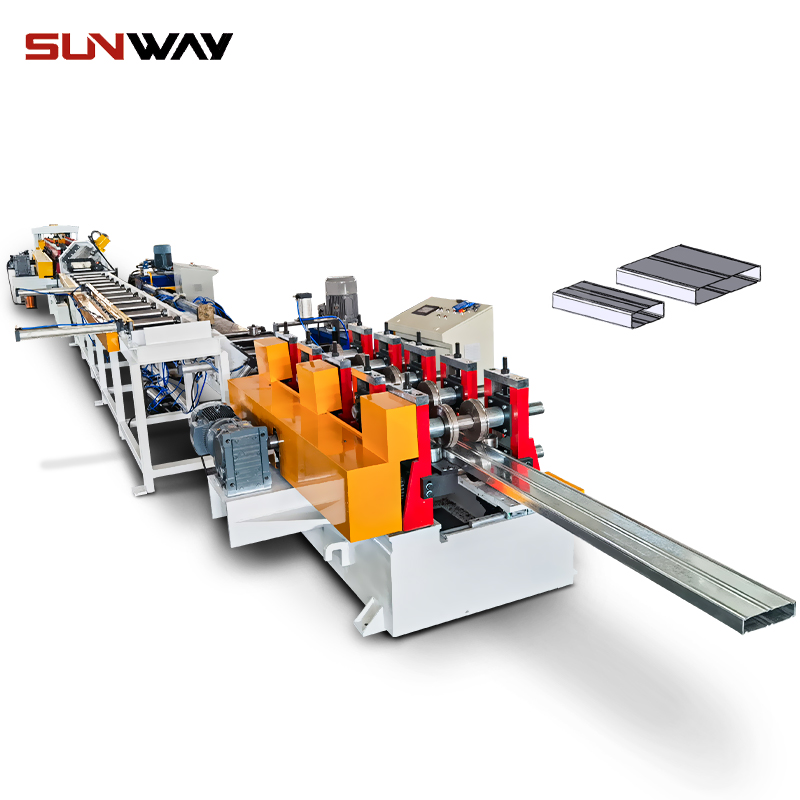
A typical production line may include a decoiler, feeding and guiding equipment, a roll forming section, cutting equipment, and additional joining or welding units where required. The exact configuration depends on the beam construction and the level of automation required.
For manufacturers, the primary objective is to produce profiles that consistently meet the approved drawings and manufacturing tolerances. Equipment selection should begin with the finished beam design rather than assuming that one machine configuration is suitable for every box beam.

2. Two Main Box Beam Manufacturing Methods
Box beams can be produced through different forming and assembly routes. Two common approaches are direct forming from a single steel strip and assembling two separately formed C-shaped sections.
Method 1: Single-Strip Box Beam Forming
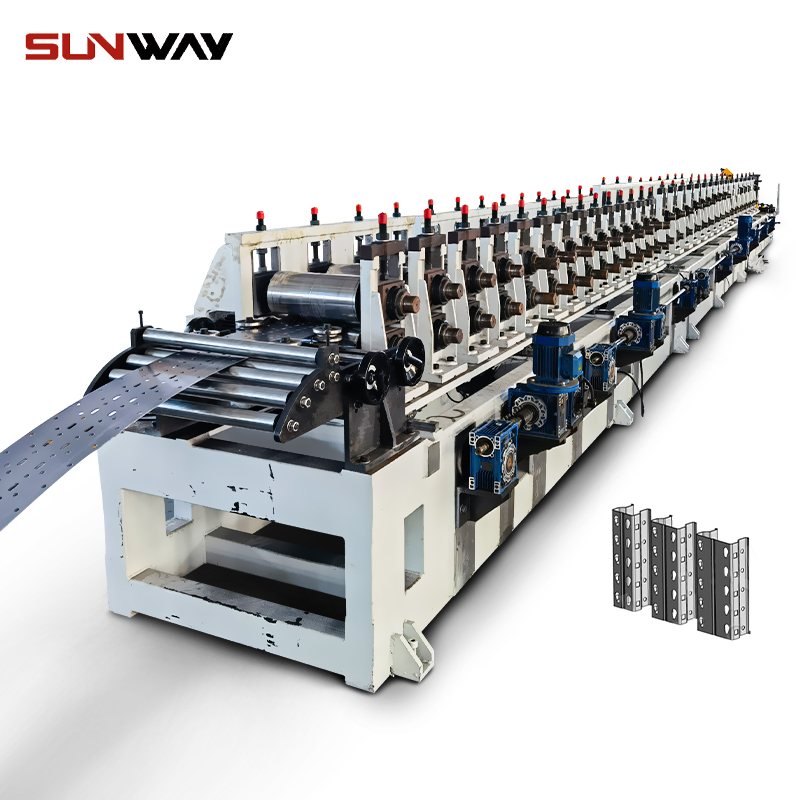
In this approach, one steel strip passes through multiple roll forming stations. Each station introduces a controlled amount of bending until the strip develops the specified box-shaped cross-section.
Depending on the design, the longitudinal edges may require welding or another defined seam-closing process. The finished profile must maintain the required geometry and joining integrity throughout its length.
One potential advantage of this approach is that the beam body can be formed from a single strip, avoiding the need to manufacture and assemble two separate C-shaped components. Material consumption, however, depends on the actual profile geometry, edge design, and required section dimensions.
The forming sequence must also account for material properties, bend radii, dimensional stability, and the requirements of the final joining process.
Method 2: Double C-Channel Assembly
The second approach forms two C-shaped steel channels separately. The channels are then positioned together and joined through a specified interlocking, welding, or other assembly method to create the final box beam.
This route allows manufacturers to design the individual channel profiles and the joining arrangement around the intended beam geometry. It may also require additional equipment for profile handling, alignment, assembly, or joining.
The final performance depends on more than the two individual channels. Their relative positioning, joint design, and manufacturing consistency influence how the assembled section behaves as a structural member.