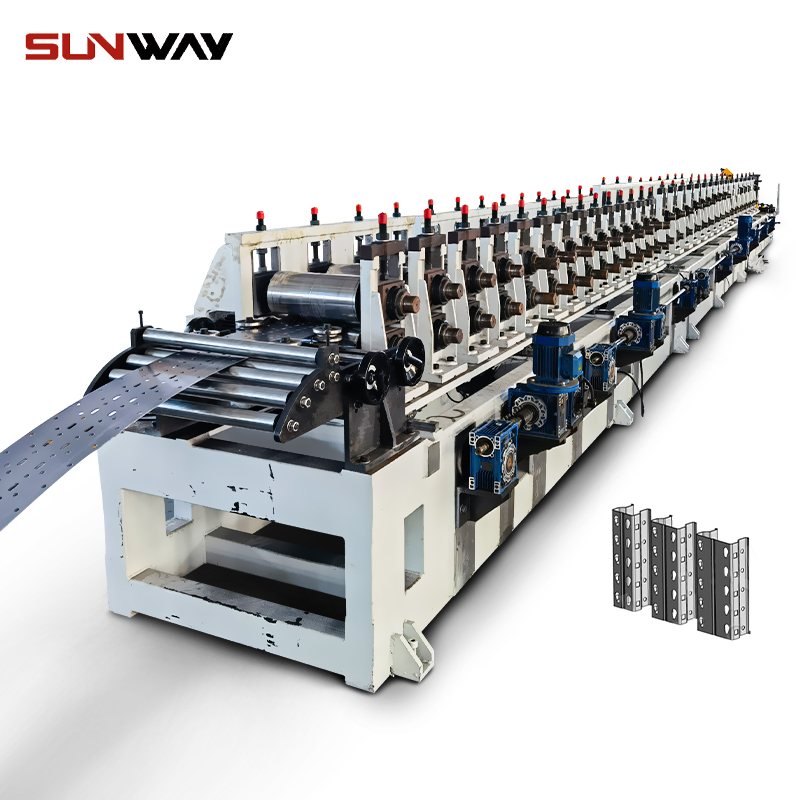
Custom Upright Post Roll Forming Machine for Industrial Racking Systems
Warehouse Shelf Upright Rack Making Machine: The Backbone of Modern Storage Systems
Imagine a warehouse – a vast, bustling space filled with movement. Forklifts weave between towering racks, loading and unloading pallets stacked with goods.
Behind this efficiency lies a crucial yet often unseen component: the warehouse shelf upright rack. And the unsung hero responsible for manufacturing these sturdy structures? The warehouse shelf upright rack making machine.
What Is a Warehouse Shelf Upright Rack Making Machine?
At its core, a warehouse shelf upright rack making machine is a marvel of metal engineering.
It transforms raw steel coils into the strong vertical uprights that form the backbone of modern storage systems.
Although its purpose seems simple, the process involves several precise and interconnected stages.
How It Works: Step-by-Step Production Process
-
Uncoiling – The process begins by unwinding massive steel coils, much like unrolling a giant paper towel roll.
-
Flattening – The steel passes through rollers that eliminate imperfections or bends, creating a smooth, uniform surface.
-
Roll Forming – The heart of the operation. The steel is fed through a series of rollers that gradually bend and shape it into the desired upright profile — imagine a continuous, high-precision metal “cookie cutter.”
-
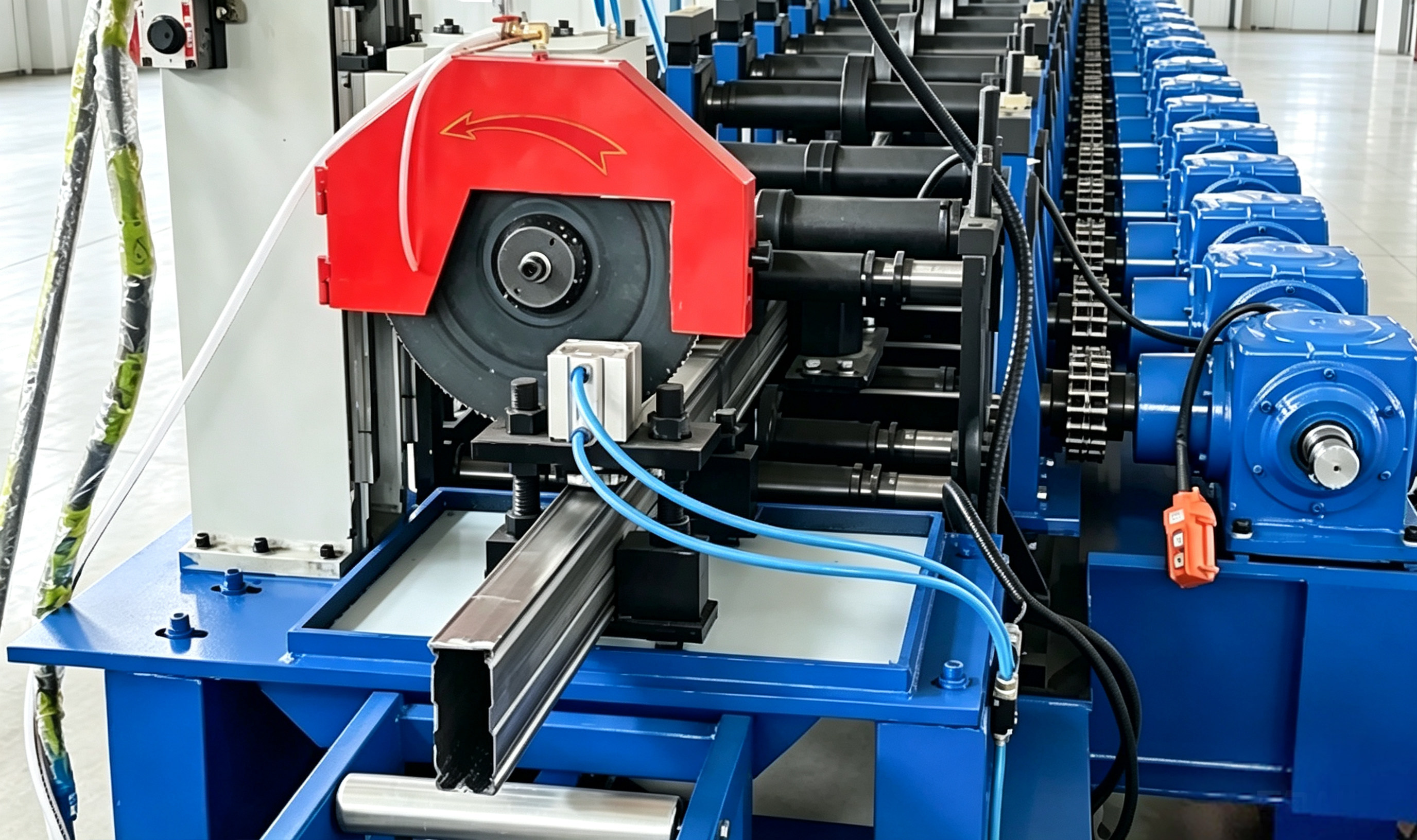
Punching and Cutting – Holes for beams, shelf supports, and safety locks are punched or laser-cut using specialized dies, ensuring precise alignment.
-
Stacking and Length Cutting – Finally, the formed uprights are cut to exact lengths and stacked, either automatically during forming or in a separate stage.
Types of Warehouse Shelf Upright Rack Making Machines
The market offers several configurations to suit different production needs:
-
Automated vs. Semi-Automated:
Fully automated machines manage the entire process — from uncoiling to stacking — with minimal human input.
Semi-automated systems require partial operator involvement, such as coil loading or product removal. -
Single vs. Multi-Station Machines:
Single-station units focus on producing one upright profile at a time.
Multi-station machines enable multiple profile configurations within a single system, enhancing flexibility. -
Speed and Capacity:
Production speed, thickness handling, and output capacity differ widely.
High-volume facilities favor rapid, high-capacity models, while smaller operations might choose slower, more adaptable systems.
Applications Across Industries
While these machines are most commonly associated with warehouse storage, their applications extend into multiple sectors:
-
Industrial Storage Facilities: Ideal for storing automotive parts, heavy tools, and building materials.
-
Retail Display Systems: The same forming principles can produce display racks for supermarkets and showrooms.
-
Data Centers: As data demands grow, these machines manufacture the strong, stable racks used for server storage.

Related News