


Mastering Interlocking Fit & Thermal Distortion in Heavy-Duty Box Beam Roll Forming: The Definitive Welding Line Guide
October 27, 2026
In industrial storage and high-capacity pallet racking systems, load-bearing horizontal members must withstand extreme static and dynamic pallet forces without sagging or twisting. To achieve maximum torsional rigidity and resistance to lateral buckling, modern rack manufacturers rely on closed welded sections rather than standard open profiles.
At the center of this manufacturing process is the box beam roll forming machine, often configured as a high-speed automatic rack box beam welding production line.
Fabricating a continuous box beam requires roll-forming two symmetrical or male-female "C" sections from 1.5 mm to 2.5 mm structural steel, mechanically interlocking them inline, and executing high-speed, dual-torch longitudinal seam welding.
However, rack fabricators frequently encounter two major manufacturing hurdles: inconsistent interlocking seam fit (leading to poor weld penetration or burn-through) and thermal welding distortion (causing camber, bow, and twisting along the finished beam).
This technical guide breaks down the tooling engineering and thermal management strategies required to achieve tight interlocking box beam seam precision and straightness across high-volume production runs.
The Mechanical Demands on Heavy-Duty Pallet Rack Beams
Unlike light-duty open step beams, heavy-duty box beams (ranging from 80 × 50 mm up to 160 × 50 mm with 1.5 mm − 2.5 mm wall thickness) are specifically engineered for heavy pallet loading up to 4000 kg per level.
The hollow rectangular cross-section delivers superior moment of inertia. However, the structural integrity of the entire rack frame depends completely on the continuous longitudinal weld connecting the two interlocked halves. If the roll forming line fails to deliver a tight, gap-free mechanical lock prior to welding, the structural integrity of the pallet rack beam is compromised.
Step 1: Achieving Sub-Millimeter Interlocking Seam Precision
A common failure mode on low-tier roll formers is seam gap fluctuation. If the clearance between the male and female lock seams varies by more than 0.2 mm, automated MIG/MAG welding torches cannot deposit consistent filler metal, causing weld porosity or structural weakness.
1. Progressive Multi-Station Tooling Passes
Achieving a tight mechanical lock requires 20 to 24 precision forming stations. Bending high-yield cold-rolled steel requires gradual forming angles (under 3.5° per pass) to prevent localized edge stretching.
2. Dedicated Hydraulic/Servo Clamping & Seam Stitching
Before entering the welding chamber, the two matched profiles pass through heavy-duty lateral and vertical calibration rolls. High-rigidity vertical squeeze rolls apply uniform pressure to pre-stress the seam, ensuring continuous metal-to-metal contact with a joint clearance tolerance of ≤±0.1 mm.
3. Precision Roll Tooling from Cr12MoV / D2 Die Steel
Roll tooling must be CNC-machined and vacuum heat-treated to HRC 58–62. Hardened rolls resist abrasive wear from hot-rolled galvanized coils, preventing profile drift over tens of thousands of operating meters.
Step 2: Neutralizing Thermal Welding Distortion in Continuous Production
Continuous dual-gun seam welding introduces concentrated thermal energy into thin-walled rectangular tubes (1.5 mm−2.5 mm). Because the top and bottom weld seams undergo rapid localized heating followed by uneven air cooling, severe longitudinal contraction stresses develop.
Without active thermal control and mechanical compensation, the box beam will curve upward or twist, making robotic beam connector (bracket) welding impossible.
Key Engineering Countermeasures:
1.Synchronized Symmetrical Dual-Torch Welding: Automated tracking torches on both sides must fire simultaneously with balanced heat input (voltage, amperage, and shielding gas flow) to balance internal stresses across the neutral axis.
1.Synchronized Symmetrical Dual-Torch Welding: Automated tracking torches on both sides must fire simultaneously with balanced heat input (voltage, amperage, and shielding gas flow) to balance internal stresses across the neutral axis.
2.Integrated Liquid Cooling Jackets: Water-cooled copper backing blocks or localized water mist zones immediately follow the welding arc, cooling the seam rapidly and narrowing the heat-affected zone (HAZ).
3.Multi-Axis Post-Weld Turk's Head Straightening: An integrated 4-axis Turk's head straightener equipped with micro-adjustable driven rolls applies reverse corrective force while the steel remains ductile, holding total finished profile straightness to ≤1.0 mm per meter.
Flying Friction Cut-Off vs. Cold Saw Cutting for Closed Sections
Cutting a closed structural box beam differs fundamentally from cutting open profiles. Traditional guillotine press dies crush rectangular hollow walls and create large inward burrs that interfere with bracket welding.
| Cutting Method | Standard Hydraulic Shear | SUNWAY Flying High-Speed Cold Saw |
|---|---|---|
| Profile Deformation | Causes wall collapse and burrs | Zero profile deformation / Clean square cut |
| End Face Squareness | ±1.5 mm | ≤±0.5 mm (Robot Welding Ready) |
| Cycle Speed | Requires line deceleration | High-speed continuous synchronization |
| Secondary Deburring | Mandatory manual grinding | No deburring required |
Modern heavy duty box beam roll forming machines integrate servo-driven CNC flying cold saws. The saw carriage accelerates to synchronize perfectly with the moving beam, cutting the hollow cross-section smoothly with a carbide-tipped blade.
Technical Specifications: Standard vs. SUNWAY Integrated Lines
| Performance Metric | Standard Commercial Roll Former | SUNWAY Automated Integrated Line |
|---|---|---|
| Production Speed | 6−10 m/min (Stop-and-Go) | 12−20 m/min (Continuous Welding) |
| Profile Size Range | Fixed single size | 80×50 mm to 160×50 mm (Quick Change) |
| Interlock Joint Tolerance | ±0.35 mm | ≤±0.10 mm |
| Finished Beam Straightness | ≤2.5 mm/m | ≤1.0 mm/m |
| Weld Penetration Quality | Spotty / Visual Check | 100% Full-Seam Uniform Penetration |
| Automation Level | Manual Feed & Handling | Uncoiling ➔ Forming ➔ Welding ➔ Cut-off |
Engineering Excellence by SUNWAY Machinery
At Wuxi Sunway Machinery Co., Ltd. (brand: SUNWAY), we specialize in complete, turnkey manufacturing solutions for warehouse rack manufacturers.
Our pallet rack closed box beam roll former systems feature:
1.Modular quick-change cassette tooling allowing operators to switch between different beam depths (80 mm to 160 mm) in under 45 minutes.
2.Heavy-duty solid cast arch stands ensuring zero frame deflection during heavy roll forming.
3.Advanced Lincoln/Panasonic automated dual-torch welding integration with wire-feeder monitoring.
4.100% factory pre-commissioning with customer coil materials, full dimensional verification, and weld cross-section penetration testing prior to dispatch.
Conclusion & Next Steps
Manufacturing high-strength pallet rack box beams requires tightly synchronized forming, continuous interlocking calibration, controlled seam welding, and precision flying cut-off. Upgrading to a high-rigidity integrated production line eliminates costly manual welding rework, cuts structural scrap, and delivers certified beam safety for modern warehouse storage installations.
Ready to optimize your pallet rack beam manufacturing or expand line capacity?
Contact the engineering specialists at SUNWAY today to discuss your technical drawings and receive a customized box beam production line proposal.
Related News
2026-10-21 12
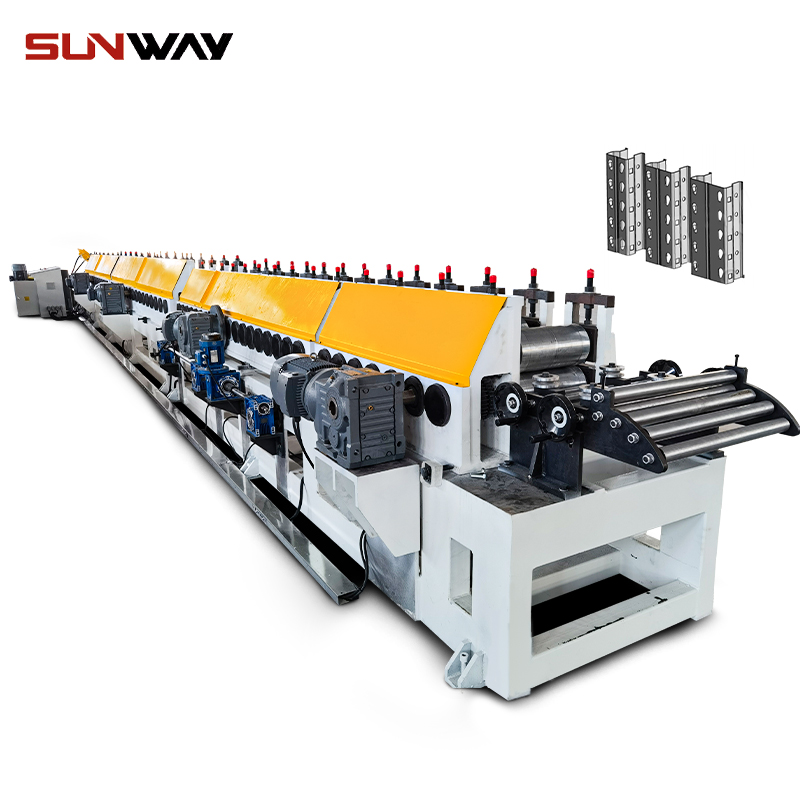
Solving Pitch Accumulation Error & Material Twisting in Heavy-Duty Upright Rack Roll Forming: An Engineer's Deep Dive
2026-10-16 18
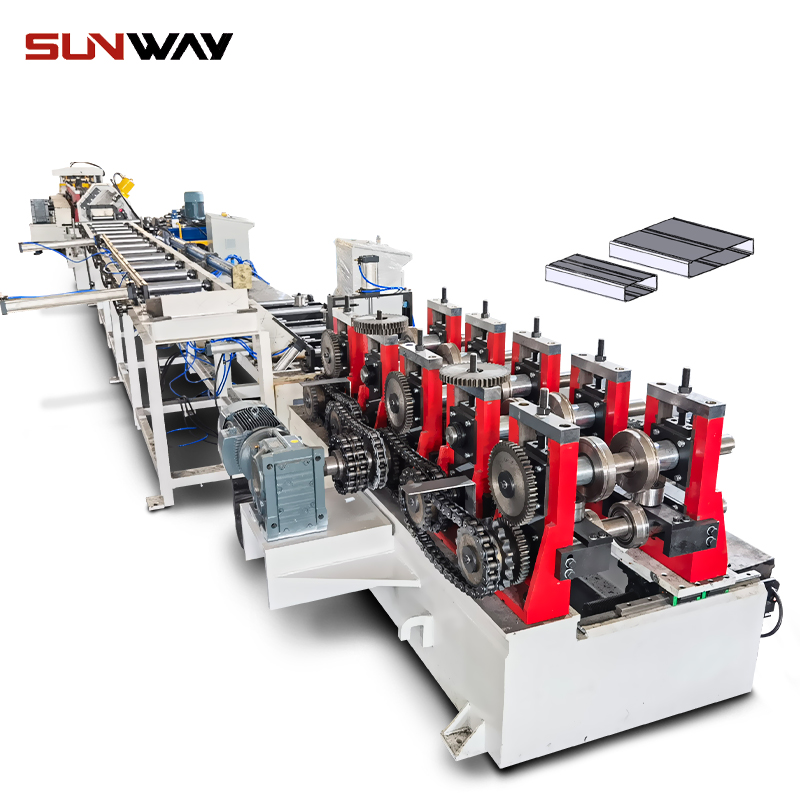
Box Beam Roll Forming Machine: How Section Design Affects Structural Performance
2026-10-10 28
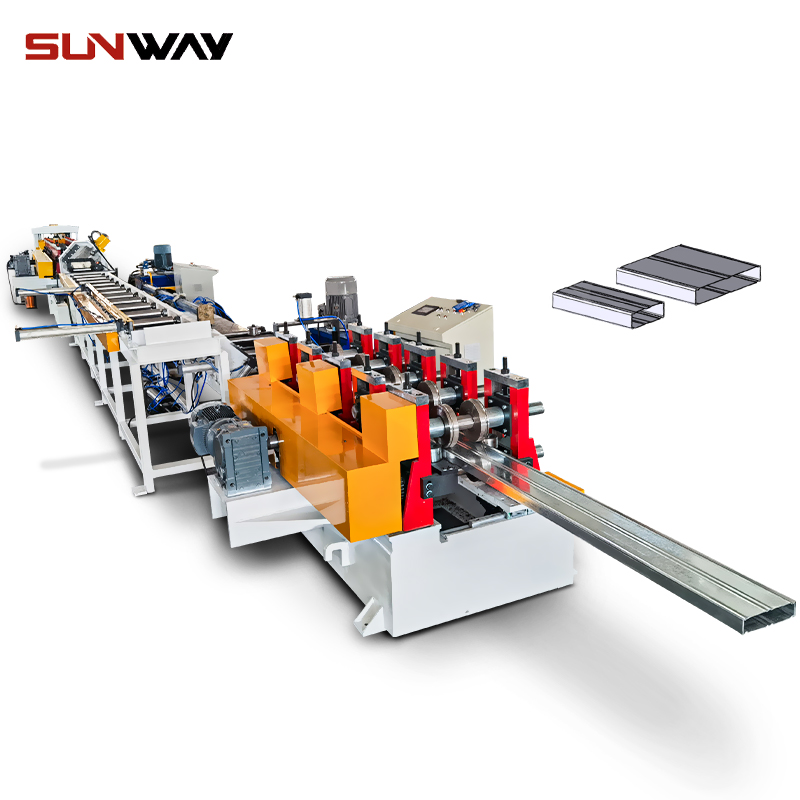
Automated Roll Forming Solutions for Industrial Racking Box Beams