The Complete Guide to Roll Formed Racking Manufacturing: Processes, Components, and Equipment
September 14, 2026
The global demand for efficient warehousing and logistics solutions has never been higher. At the heart of every modern distribution center lies a robust storage system. Among the various options available, roll formed racking remains the most popular choice due to its cost-effectiveness, flexibility, and rapid installation.
For manufacturers in the steel structure and material handling industries, producing high-quality roll formed racking systems requires precision engineering and reliable machinery. In this comprehensive guide, we will explore the essential components of these systems and how to select the right storage rack roll forming machine to maximize your production capacity.
Understanding the Basics of Roll Formed Racking
Before diving into the manufacturing process, it is crucial to understand what makes roll formed racking so widely adopted. Unlike structural racking, which uses heavy hot-rolled steel, roll formed racking is manufactured from cold-rolled steel coils. The continuous bending process creates lightweight yet incredibly strong profiles that can support heavy pallet loads.
The primary advantage of using a roll form machine to produce these racks is the high production speed and minimal material waste. Manufacturers can continuously feed steel coils into the machine, producing consistent, high-tolerance profiles that meet the rigorous demands of modern warehouses.
Key Components of a Racking System and Their Manufacturing Processes
A complete pallet racking system consists of several distinct profiles. Each profile requires a specific tooling setup on a storage rack roll forming machine. Let us break down the five critical components and the machinery needed to produce them.
1. Upright Columns (Vertical Frames)
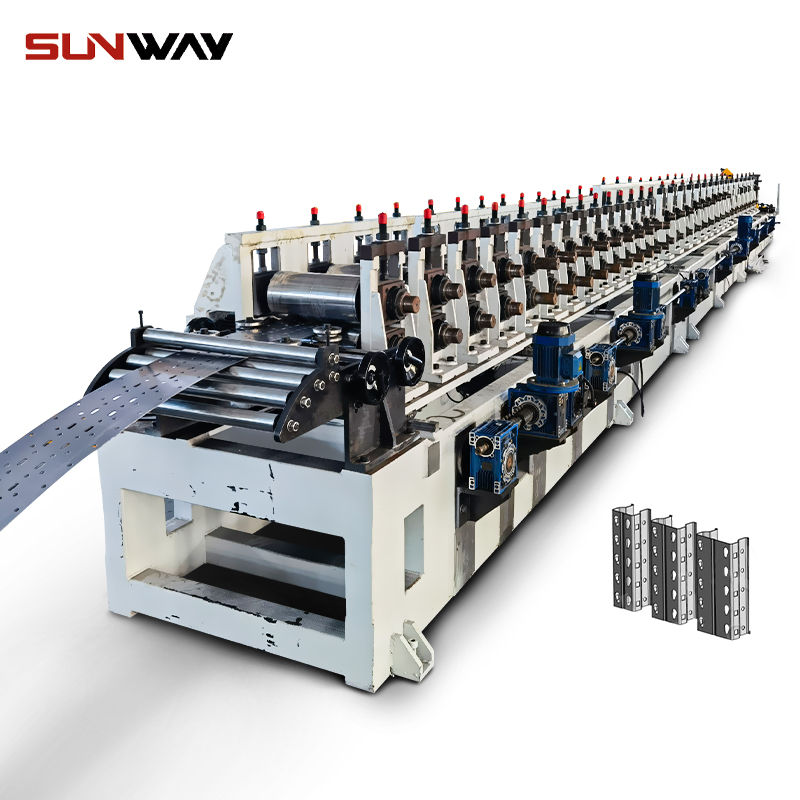
The upright column is the backbone of any racking system. It bears the vertical load and features a series of punched holes for beam connections. Manufacturing uprights requires a heavy-duty roll form machine equipped with a hydraulic punching press. The precision of the hole-punching is vital, as even a millimeter of deviation can compromise the structural integrity of the entire rack.
2. Step Beams (Horizontal Load Beams)
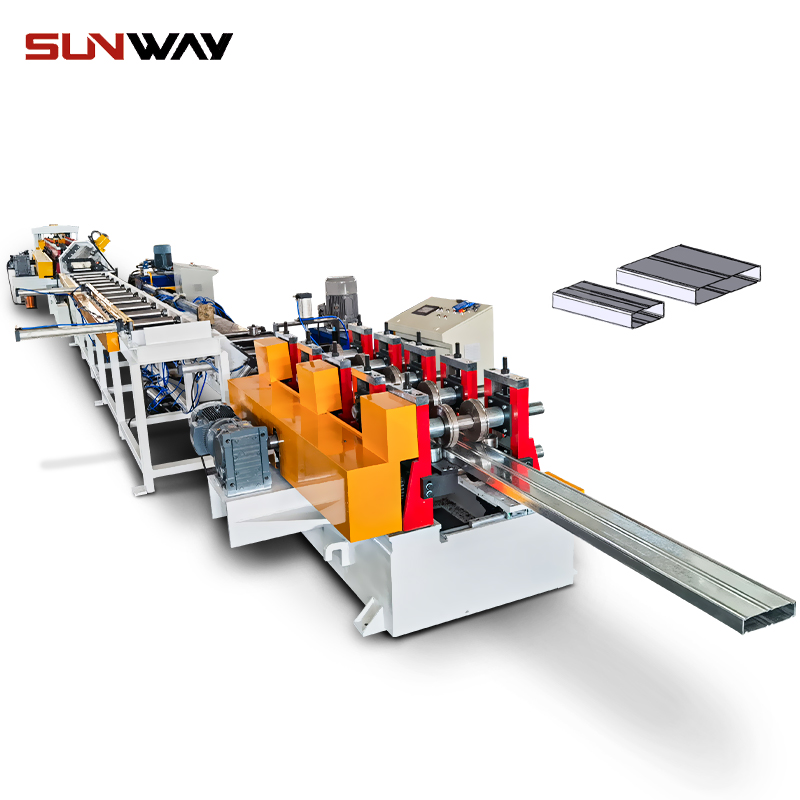
Step beams are the horizontal connectors that hold the pallets. The "step" design allows for the placement of crossbars or wire decking. Producing step beams requires a specialized storage rack roll forming machine that can handle the unique asymmetrical profile while maintaining strict dimensional tolerances.
3. Box Beams
For applications requiring higher load capacities, box beams are the preferred choice. These closed-tubular profiles offer superior torsional rigidity. A dedicated box beam roll form machine typically includes a welding station to seam the edges together after the forming process, creating a fully enclosed, ultra-strong beam.
4. Box Plates (Shimming and Support Plates)
Box plates, often used as base plates or specialized support components, require flat-to-channel forming. The roll formed racking manufacturing line for these plates ensures that the bending angles are perfectly calibrated to distribute weight evenly across the warehouse floor.
5. C-Bracing Sections
To prevent lateral movement and ensure stability, C-bracing sections are installed horizontally or diagonally between uprights. These simple yet crucial components are produced at high speeds using a C-section roll form machine, ensuring that manufacturers can produce large volumes of bracing efficiently.
How to Choose the Right Storage Rack Roll Forming Machine
Investing in a storage rack roll forming machine is a significant capital expenditure. To ensure a high return on investment, manufacturers must evaluate several critical factors before making a purchase.
Automation and Control Systems
In modern manufacturing, consistency is everything. A high-quality roll form machine should be equipped with an advanced PLC (Programmable Logic Controller) system. For instance, SUNWAY machinery utilizes imported Siemens PLC systems, ensuring unparalleled automation, precise length control, and minimal human error during the continuous production of roll formed racking components.
Material Compatibility and Thickness
Warehouses operate in diverse environments, meaning racking manufacturers must offer various steel thicknesses and materials (such as Q235, Q345, or galvanized steel). Your storage rack roll forming machine must possess the mechanical strength and roller adjustability to handle varying material gauges without compromising the profile shape.
After-Sales Support and Installation
The complexity of heavy machinery means that reliable technical support is non-negotiable. When purchasing a roll form machine, always verify if the manufacturer provides overseas installation and commissioning services. SUNWAY, for example, offers comprehensive overseas setup, ensuring your roll formed racking production line is perfectly calibrated from day one. Furthermore, a predictable lead time (typically 60 to 90 days for premium equipment) allows for accurate factory planning.
Common Mistakes in Racking Manufacturing
Even with the best storage rack roll forming machine, manufacturers can fall into operational traps. One common mistake is neglecting regular roller maintenance, which leads to surface scratches on the roll formed racking profiles. Another error is ignoring the decoiler's tension control, resulting in uneven feeding and wasted raw materials. Partnering with an experienced machinery brand like SUNWAY helps mitigate these risks through proper training and robust machine design.
Conclusion
The production of high-quality roll formed racking systems relies heavily on the precision and reliability of your manufacturing equipment. From upright columns to step beams and C-bracing, each component demands a specialized roll form machine to ensure structural safety and operational efficiency.
By investing in highly automated, PLC-controlled machinery and partnering with a manufacturer that offers dedicated overseas support, you can position your business at the forefront of the warehouse storage industry.
Ready to upgrade your production capacity or start a new racking manufacturing line?