


Scaling Warehouse Rack Production via Modular Roll Forming Systems
September 4, 2026
The Evolution of Industrial Racking Infrastructure
In the global logistics and supply chain sector, warehouse infrastructure has evolved far beyond basic metal shelving. Modern mega-fulfillment hubs, cold-chain distribution centers, and automated high-bay AS/RS facilities require complex, highly engineered structural systems capable of supporting extreme vertical loads. Today’s industrial storage installations demand structural steel components engineered to strict tolerances to ensure safety, structural integrity, and rapid jobsite assembly.
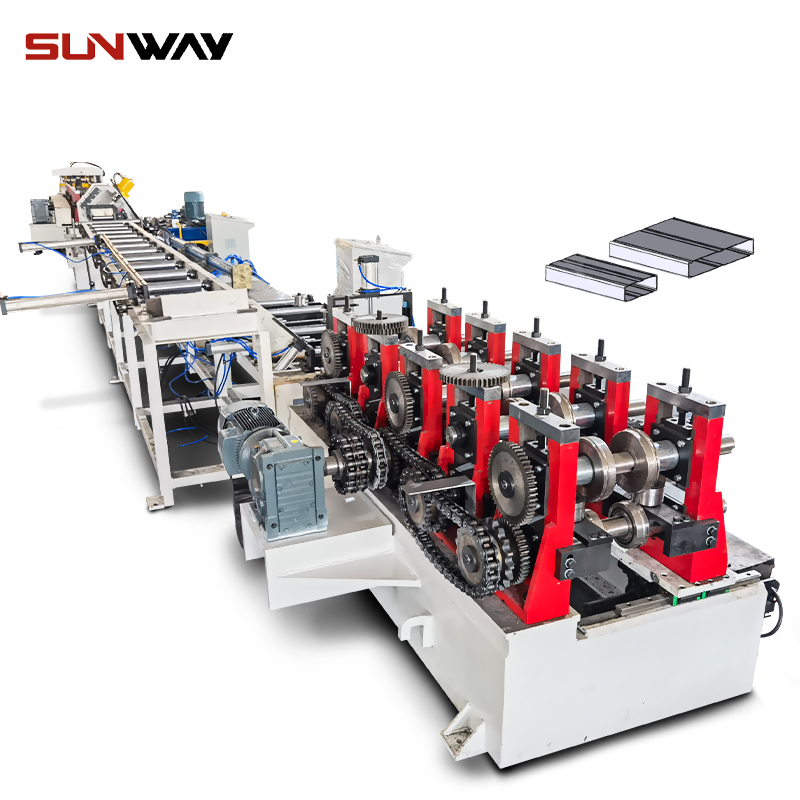
To meet this accelerating global demand, racking fabricators and original equipment manufacturers (OEMs) are modernizing their factory floors. Legacy production techniques—such as manual press-braking, standalone punch presses, and non-integrated rolling mills—create severe operational bottlenecks, high labor overhead, and inconsistent profile dimensions. Scaling factory output requires transitioning to turnkey, automated machinery networks. Sourcing an integrated storage rack roll forming machine ecosystem has become the primary strategy for industrial manufacturers looking to build scalable, high-margin racking production plants.
System-Level Complexity: Why Modern Racking Demands High-Precision Cold Roll Forming
A complete warehouse racking installation operates as an interdependent structural matrix. The vertical columns, horizontal step beams, diagonal truss bracing, and steel shelf panels must mate seamlessly during field installation.
The Assembly Tolerance Bottleneck
A common failure in rack manufacturing is profile tolerance mismatch. If individual component profile dimensions drift during rolling, or if hole punch pitch varies along a 12-meter profile, field installation stalls. Beam connector claws fail to engage upright slots, and shelf panels bow or buckle inside step beam flanges.
Eliminating Cumulative Error via Cold Roll Forming
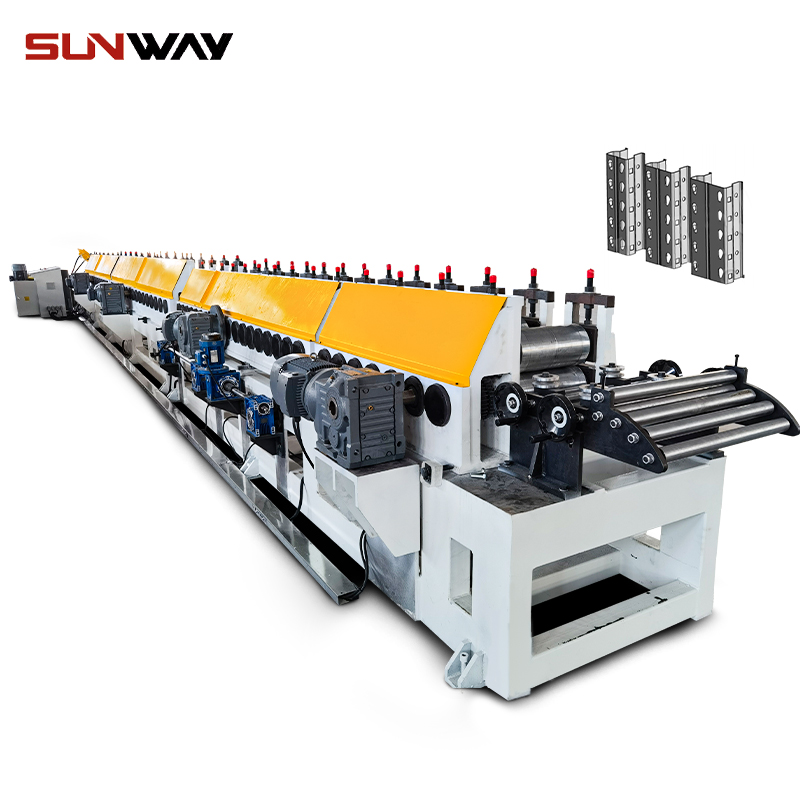
High-precision continuous cold roll forming resolves these structural assembly issues. By progressively shaping heavy-gauge steel (0.8mm - 4.0mm) through engineered roller stations, an automated pallet rack roll forming machine line delivers consistent cross-sectional geometries and tight linear tolerances across millions of structural meters.
The 4 Structural Pillars: Matrix Manufacturing of Racking Components
Building a complete warehouse rack system requires a synchronized manufacturing matrix. Leading equipment producers engineer targeted machine lines tailored to the specific structural demands of each racking component.
Component 1: Heavy-Duty Uprights (Columns)
The vertical backbone of any storage frame. Upright columns feature complex 9-to-13-bend Omega profiles with dense arrays of teardrop, keyhole, or butterfly slots. These profiles demand a specialized pallet rack roll forming machine equipped with heavy-duty cast-iron stands and multi-cylinder servo hydraulic punching arrays to process steel up to 4.0mm thick without frame flex.
Related News
2026-10-27 2
Mastering Interlocking Fit & Thermal Distortion in Heavy-Duty Box Beam Roll Forming: The Definitive Welding Line Guide
2026-10-21 14
Solving Pitch Accumulation Error & Material Twisting in Heavy-Duty Upright Rack Roll Forming: An Engineer's Deep Dive
2026-10-16 19
Box Beam Roll Forming Machine: How Section Design Affects Structural Performance